Have you heard the phrase “the cobbler’s children have no shoes?” It’s an old phrase that appears in many cultures and languages that means the cobbler (or shoemaker) is so busy making shoes for others that he forgets to make some for his own kids. In years past, I’ve found that we’ve acted much like the cobbler when it came to running Sense & Respond Learning. We’ve been so busy teaching, training and coaching other organizations to set goals, focus their work on their customers and embrace AI in valuable ways that we forgot to check on ourselves. With our recent growth, adding certified training partners all over the world and a dedicated head of growth, it was time to rectify that. Not only did we actually set clear, actionable and human-centric OKRs for the business for 2026 we also defined two clear content strategy pillars for our work this year. I want to share those two ideas with you (and I’d love your feedback on them as well).
What does good look like?
This is our first content pillar for 2026. Between Josh Seiden and myself we have about 752 years of product development experience 😉 . In all seriousness though, we do have a lot of experience and one of the perennial lessons from all those years of work is that, no matter what changes in the world, the definition of “good” needs to be explicit, current and observable. New tools, new technologies and new customer consumption behaviors are tempting motivators to redesign everything from scratch. But with these new tools and technologies, hello AI, understanding what “good” actually looks like is difficult. We’re charting new territories. Often, the early results in these new endeavours end up falling flat.
In 2026, we are going to focus much of our content in helping teams, leaders and organizations understand what good customer experience looks like in the AI era. It doesn’t necessarily mean throwing away everything we’ve done to date. It does mean reevaluating how we do everything and understanding how new capabilities might make our customers more successful as well as our companies. We’re going to provide specific, actionable, practical tools and techniques to help you and your team build more successful AI products and services. We’ll help you use AI-powered tools to learn faster, define success more explicitly and measure the impact of your work in a way that pushes back on the interminable “just ship it” mindset.
The fundamentals of good product management are more relevant than ever
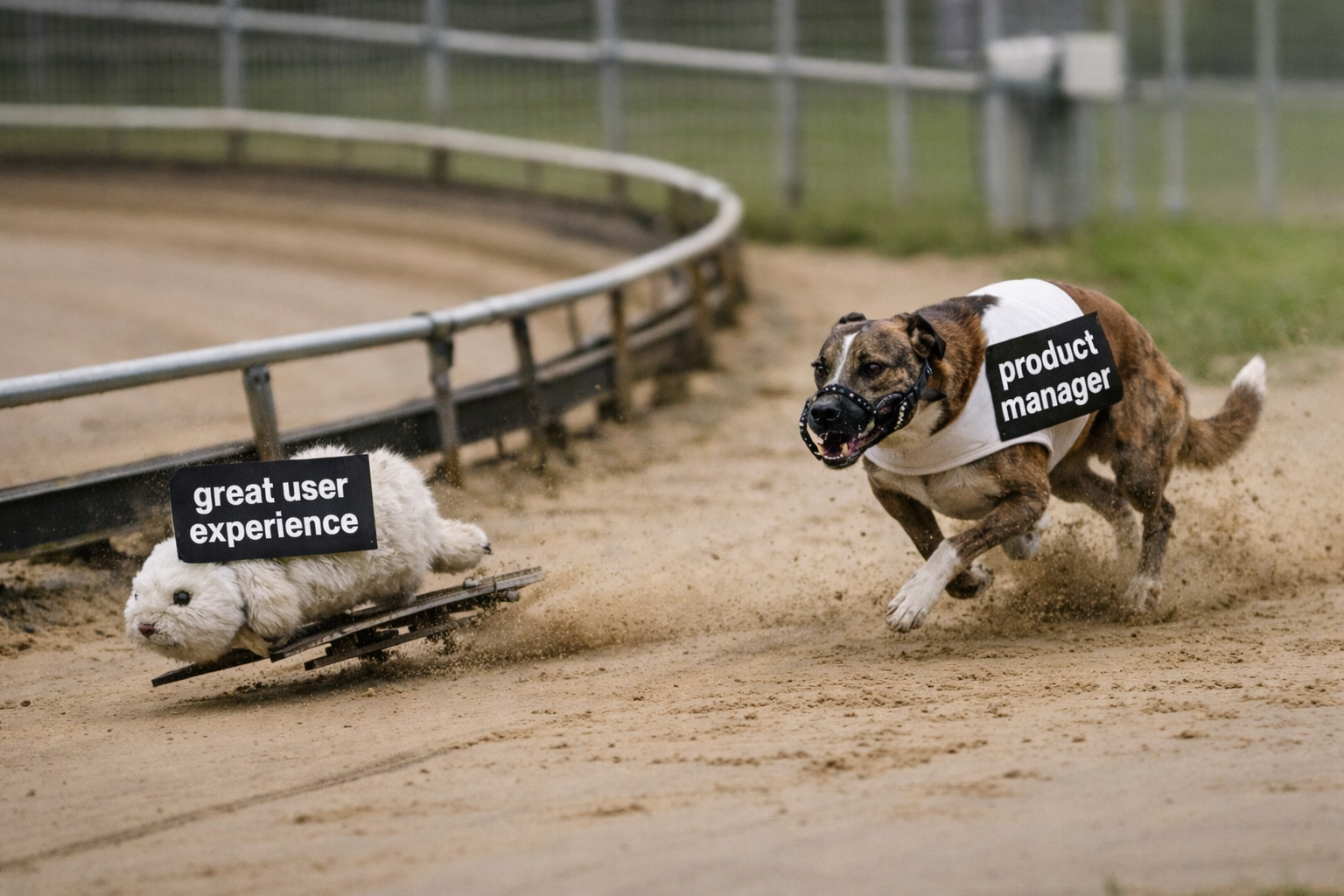
If nothing else (and it’s not nothing), AI makes it easier than ever to ship new features to market faster. It’s a CEO’s dream in that sense. It also means that, as much as we can ship good features to market, we can also ship crap much faster too. The idea that we should just vibe code our ideas, put them in production, see what happens and learn from it is tempting. It’s build/measure/learn on steroids. And yet, our customers still don’t actually care what technology we’re using or how cutting edge we are and they won’t stand for a subpar user experience. They do (still) care about their needs being met in a way that allows them to stay productive, efficient, relevant and successful.
This is where our second content strategy pillar for 2026 comes in. The skills and techniques that have built great products up until this point, are more important now than ever. Because we can create ideas that appear production-ready in minutes with infinite iterations determined by an AI model that’s been trained on outputs rather than customer needs we have to practice disciplined product management. What are the customer needs now? What can the technology do today that it couldn’t do before to help them? How does that fit into the way we deliver and capture value from our market? How do we ensure that what we’re shipping is the best version of that customer experience? These questions have been key to your product’s success up until now and they will continue to be so.
The yin and yang of product development in the AI era
This is where our content – from newsletters to blog posts to webinars to podcasts to keynotes – will be focused this year. These aren’t two stand-alone content pillars. They are highly complementary. Understanding what “good” looks like requires modern product management skills. “Good” is a moving target. In a world of infinite, non-deterministic AI output the path to “good” frays infinitely as well. This year, our work is going to focus on harnessing AI to help make you a better product manager – not by abandoning everything you’ve learned before but by exponentially amplifying those skills to build not just good, but great customer experiences.