When setting key results for our objectives in almost all cases we want them to be outcomes – measurable changes in human behavior that drive business results. If our customers are getting value from our products and services we want that reflected in how they’re using them. More often than not these metrics take a familiar form. They reflect people doing more things in our products or they might reflect an increase in the number of people doing those things. Generally we see metrics that reflect a positive view of behavior change. There are situations however where we want to see less behavior and perhaps fewer people doing things. This might seem counterintuitive so let’s take a look at a few examples.
Situations where we want people doing less
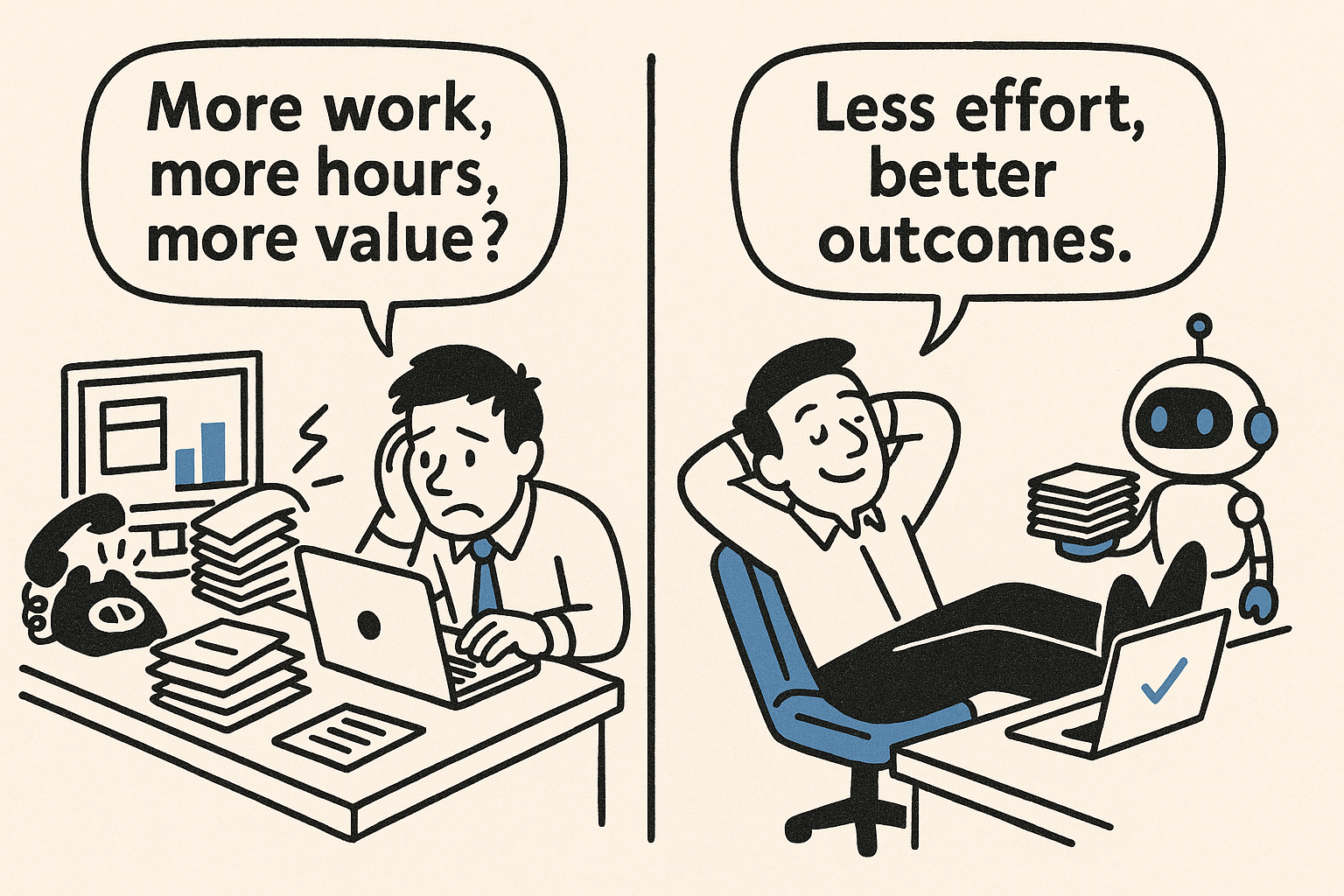
Let’s take AI-enhanced tools. As my friend Rob Käll, CEO and founder of AI-powered startup Cien.ai, always tells me, AI should enhance productivity and decision-making in existing processes and workflows. The usage patterns in our AI-enabled tools should absolutely change if we’re delivering on the promise of artificial intelligence. For example, if your product allows me to better understand what my sales teams are doing, what activities yield better results and how to further optimize the sales team’s tactics, I would expect to see my decision making time reduced dramatically. In addition, where I might have spent hours or even days in a previous tool or set of tools to reach the same decisions, I would expect my time using your tool to continuously decrease.
In this situation, the counterintuitive key results we may set as our goals is that the time to make decisions by sales leadership team members is reduced by 65%. We may also measure that time spent in the tool by these same users decreases quarter over quarter by 15%. In this case, the productivity enhancements that AI provides makes us use the product less than we would have used it or similar products in the past. This feels counterintuitive because, in theory, we’d want our users spending more time in the tool as a sign of delivered value. In this case, however, less time in the tool – assuming it continues to generate insight for the user – is likely the right metric for your key result.
Situations where we want fewer people
I would guess if you asked 100 companies where they want their user numbers to trend they would say they want them to trend up. Yet, there are situations where the better the service is, the fewer people would actually use it. In these cases, the key result you might use would indicate an overall decrease in the number of users you have on a consistent basis. Let’s come back to our old friend AI. Now, let’s say that as a company you’ve deployed a customer support AI agent to deal with as many customer requests as possible. As your users reach out for help the AI agent is the first point of contact. The better it works, the fewer folks need to speak to an actual human being.
In this case your key result is going to measure how many humans get served successfully by the AI agent but you’re also going to measure a (hopefully) reduction in the number of folks who require help from a human agent. Counterintuitively, we won’t want our customer service reps to help more people more efficiently but rather we’d want to see fewer and fewer support calls ever making it to that tier of service. If that AI agent was truly smart it would be recognizing user patterns that trigger support calls in the background and proactively steer users towards their desired functionality without even reaching out to get help at all.
Less is, indeed, sometimes more
Measuring the behavior of our customers is the best way to know if we’re delivering value to them. More often than not we want to see their behaviors increase as well as the overall number of customers. However, in certain situations the metrics we choose should reflect a decrease in usage and perhaps a decrease in overall user numbers as well. It may not make sense at the onset but sometimes these are the actual measures of productivity, efficiency and effectiveness of our products and services.