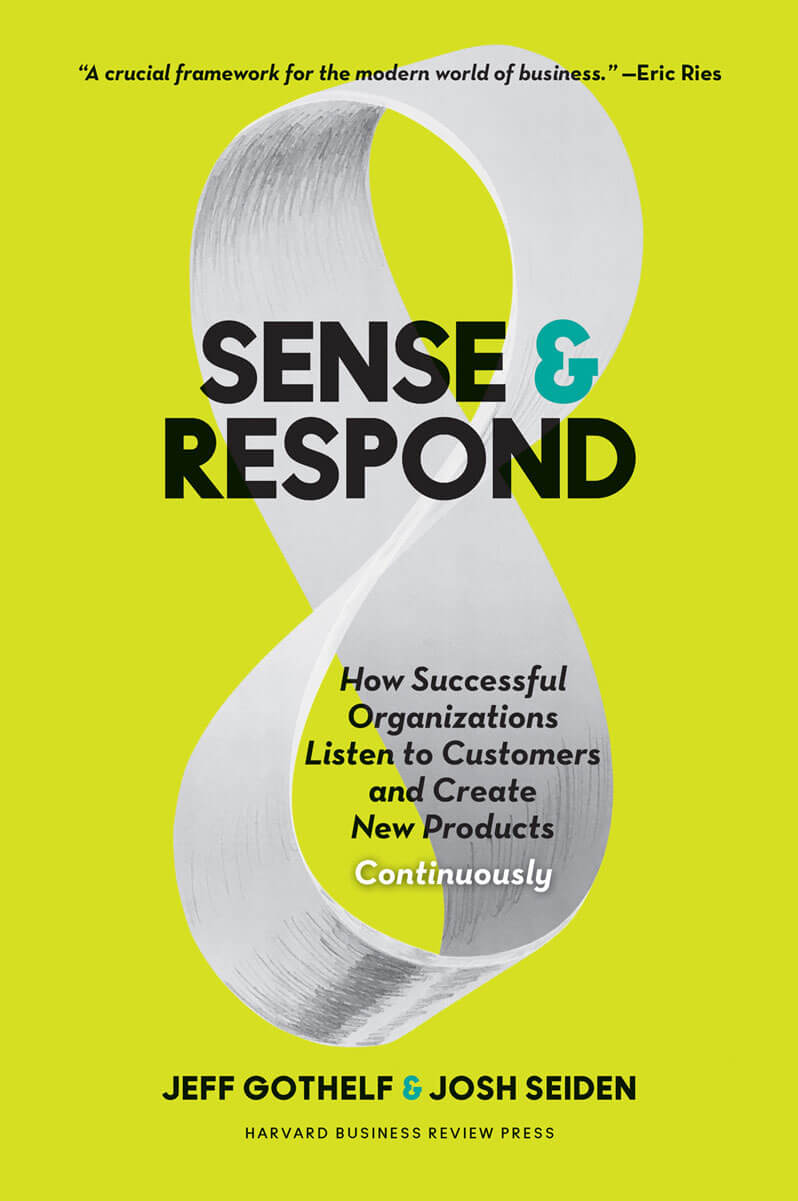
Last week’s LinkedIn post about the re-emergence of OKRs at the end of each summer struck a nerve. It is, once again, goal-setting season for many companies. Once again, we will ask and be asked to predict the future. What will you build? What will it cost? What will the ROI be? And once again, we will manufacture numbers based on historical data for existing products and services. And for new products? Those numbers will come out of thin air. Sure, our experience and expertise will weigh in but ultimately, we’re just going to make something up and hope we get there by the end of this budgeting cycle. But, and hear me out on this, what if this time around we tried something different? What if we tried something that gives us the flexibility to adjust both our work and our budgets as we move through that next cycle? What if this year, we try human-centric goal setting with OKRs?
The electric fence will always shock you
If you have a dog and a yard or garden you might use what’s called an “invisible fence” to keep your dog from running away or getting into danger. This is an electric shock color that triggers when a dog exceeds the physical boundaries of your yard. Dogs learn very quickly that doing certain behaviors – like walking too far in one direction or another – causes them a bit of pain. Guess what they do once they learn this? They stop doing the behavior that hurts.
In the office, and especially during planning and budgeting season, we walk right up to our “invisible fences” and right through them. We don’t learn. Instead we get asked to pitch lengthy business cases that offer no validation of our ideas, just financial predictions. We then vie for scarce resources and, if we get a green light, head down a path we know to be wrong to some extent hoping we can deliver enough value in the next 12 months to be able to ask for more next time around.
The first step is admitting you have a problem
This year, I challenge you to try something new. Challenge the confidence with which everyone presents their business cases. Feel free to use previous years as examples of success/failure/completion rates.
Admit we don’t know what the ROI will be. Heck, admit you’re not even sure if it’s the right idea to work on. Admit that any predictions you put forward are your best guesses and that you will likely be wrong. Instead of proposing a fixed solution, propose a problem to solve. Discuss the success of that problem in terms of human (i.e., customer) behavior changes rather than in terms of deployed solutions. And, if it makes everyone feel better, tie those human behavior changes to financial returns.
Here’s the catch though – instead of committing to those numbers, propose them as hypotheses. Be clear that the ideas and targets you’re presenting are a set of unproven assumptions and that as new information comes in you and your team will adjust course based on what you’re learning. The course adjustments could be functional or strategic changes and they might also be ROI changes. Promise to your stakeholders that if, at any point, you collect enough evidence to declare your team’s efforts unsuccessful, unsustainable or simply not valuable you will make the case to kill your current hypotheses and shift to alternative ones for solving the customer problem.
Commit to transparency, humility and learning
The commitments you make to your stakeholders instead this year will focus on clear, consistent and frequent communication about your progress and learnings. You’ll commit to changing course in the face of contradictory evidence. And you’ll promise to share those learnings across the entire organization.
You are not going to abdicate leadership, creativity nor innovation. Instead you are going to use those qualities to continuously improve the work your team is doing and, if at any point, you realize that work is no longer shifting your customers in the right direction, you’ll adjust the work.
I know it won’t be easy. OKR theater is second only to budget theater. Be different this year. Take goal-setting season and turn it into a positive experience that not only sets realistic goals but challenges your team to be their most creative in the process.
I’m confident you can pull it off. If you’re not sure how, ask me.