Author: Jeff Gothelf
-

The Words We Use to Avoid Accountability
We say these words all the time yet they mean nothing. Here’s a list of phrases to avoid and what…
-

OKR Anti-pattern: Using measures of system behavior
Measuring the performance of our products and services can easily get confused with measuring our users’ behavior. Here’s how to…
-
Discipline-specific OKRs
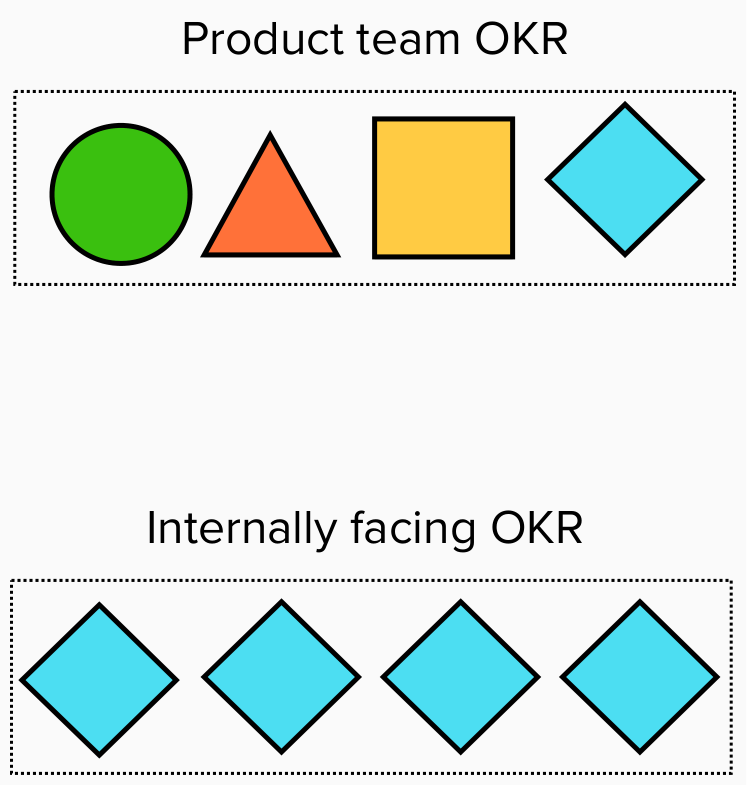
Disciplines that function as services to product teams can have OKRs too. Here are two ways to think about how…
-
Everything has an origin. Don’t be afraid to question it.
Just because we’ve always done things a certain way doesn’t mean they still make sense in a modern context. Questioning…
-

How to use time boxes to design experiments
Running experiments in a corporate environment can be daunting. Here’s one trick to help bring good ideas into perspective.
-

Outcomes are the success criteria for your hypotheses
If you’re going to work with hypotheses you need clear success criteria. Outcomes provide the objective lens needed to determine…
-

Business Problem Statements vs Opportunity Statements
Defining your work is crucial to creativity, innovation and agility. Here are two templates to help your team do that.
-

How do OKRs impact the tools teams need to be successful?
OKRs require continuous learning. Your teams require tools that help them do that. Here’s what they’ll need.
-

Percentages or absolute numbers for OKRs?
If your key result is a metric (and it should be), should you use absolute numbers or percentages? Here are…
-

Scaffolding – solidifying a change with temporary supports
Sometimes building in seemingly simple supports can strengthen a new way of working in unexpected ways. Here are two.