
About 15 years ago I was commuting to New York City daily on the train. One of the suburban dads who commuted with me every morning was a guy named Steve (to be honest I don’t remember his actual name but for some reason Steve fits). Steve was a traditional graphic designer. And he was always looking for work. I would ask Steve why he didn’t transition into visual design for the web or even UX design. His response was always, “I don’t know how to do that stuff.” I suspect many mid and late-career product managers are feeling the same way these days. AI is seemingly everywhere. New tools, technologies, ways of working, and terminologies pop up on a weekly basis. “I don’t know how to do that stuff” isn’t an option for anyone interested in extending the runway in their PM career.
Step 1: Back to being a beginner
If you’re like me (20+ years into your career, variety of employers and experience, etc) you’re likely an expert in your field. It feels good to be an expert. People seek out experts and respect their seniority. The upheaval caused by the proliferation of AI-based products and AI-based ways of working means we have to go to a place most of us find very uncomfortable – the beginning. If the Era of the Middle-aged Product Manager is going to be filled with stories of success (and fewer stories like Steve’s) it’s time to embrace humility.
Coasting on the skills that got you this far without being able to competently speak to and about the current state of digital products and services is a risk you can’t afford to take. This means a few things:
- Reading the top voices on AI and other leading product management publications is a great place to start (Lenny’s newsletter has, particularly lately, been full of amazing, concise AI learning and resources)
- Take a few online classes, even if you have to pay for them yourself. There is a growing mountain of AI-focused courses from the very basic to the most advanced. Spend the money and make the time for the classes. (Maven is a great resource for a variety of ways to onboard to AI).
- Spend time with AI tools – both the generic ones like ChatGPT and Claude as well as the domain-specific ones like Lovable, Bolt, V0, Figma Make, et al. (Pro tip: if you don’t know where to start with these tools, ask them. The tools themselves will help guide you down an initial path. You can open up a ChatGPT or Claude chat and literally tell it, “I am a mid-career product manager now tasked with building up my AI knowledge. Work with me as my AI teacher and coach to help me learn and focus on the most important things I need to know to be successful in my career. Assume I know nothing.” And hit go.)
There’s a theme here – you now have to carve out time to be a learner again. This isn’t optional. Without real world, practical experience with the technology your expertise will wane along with your ongoing career prospects.
Step 2: Focus on learning the fundamentals of AI
Your learning journey should make you proficient in the basics of AI. You should be able to speak intelligently about terminology like LLM, evals, RAG, MCP, GenAI, hallucinations, bias et al. You don’t, necessarily, have to know exactly how to implement or deal with each of these ideas but speaking intelligently about them is crucial.
You should understand the capabilities of the tools landscape:
- What can they create quickly?
- At what level of quality?
- How much work has to go into refining the output of these tools?
- How to write prompts that generate better results?
- How might you build more efficiency and productivity into your and your team’s ways of working with these AI tools?
My best advice here is to build something. Identify a task you dislike doing – professional or otherwise – and build an AI-enabled tool to help you deal with it more effectively. The process of building something (perhaps for the first time in a while?) is invigorating and by far the most educational.
Step 3: Understand your context and adapt for it
AI proponents are hailing this new technology as a revolution that fundamentally changes what product management is. Companies are hearing these hot-takes and challenging their teams to do more with less. Why do you need a product manager, designer, researcher and coder when you have ChatGPT? Now, if you work in a startup, that’s a fair question. VC’s are demanding their portfolio do more with the same amount of funding rather than hiring headcount.
But most of us, at this point in our career, aren’t working in small startups. We work in large, slow, multi-national companies that are slow to adopt, adapt and change. This doesn’t mean they won’t. And they’re certainly always looking for efficiencies to enhance (read: people to lay off). The change though, will take time. This is your opportunity to lead. Rather than leaning into your ego, embrace the new challenge. Take the initiative to learn and build opinions on AI and how it can be applied to your company. Be the same leader you’ve been for the last few years by modeling the behavior you want to see in your teams. Humility, learning and adjustment of your perspective are key to your success.
The Era of the Middle-aged Product Manager is here for those willing to work for it
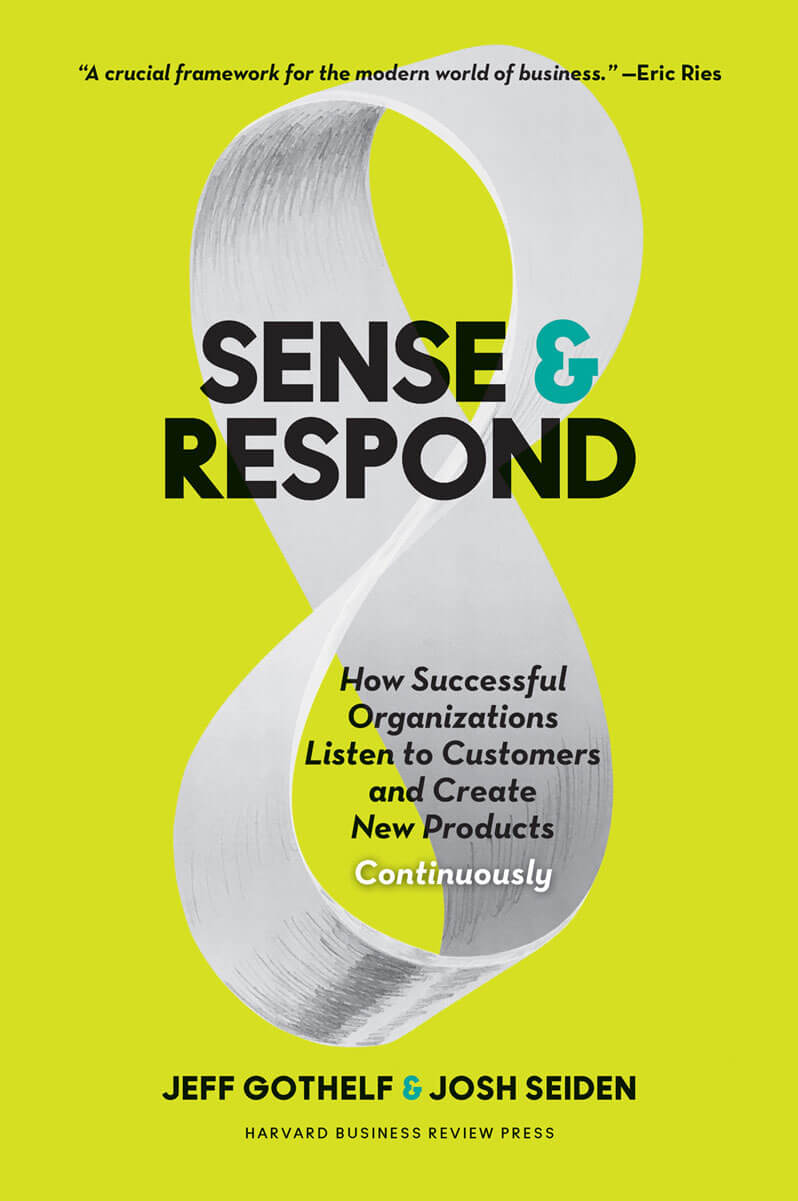
This idea that product management is now somehow shifting into a different job feels premature, especially in the enterprise. We will continue to do the kind of work that builds great products and services. After all, AI is just a new technology that has the potential to deliver tremendous customer value if deployed correctly. Our employers will adopt AI and adapt but this won’t happen overnight. And it won’t change the need to collaborate with our colleagues, understand our customers and sense and respond our way to the right outputs – even if they are non-deterministic. The responsibility, however, falls to us. We can take on this mid-career learning journey with the humility it requires or we can end up like Steve, hunting for work mumbling how we don’t know “how to do that stuff.”
I’m rooting for you.




One response to “The Era of the Middle-Aged Product Manager”
[…] Source: The Era of the Middle-Aged Product Manager […]