Regardless of the method you’re using to set goals, if your efforts focus on making your customers successful you are on the path to making the business successful as well. Customers can be the people who buy your product, vendors who service your company or internal colleagues. In short, the humans who consume the things you make at work are your customers. Objectives and Key Results happen to be popular at the moment but regardless of their flavor-of-the-month status, if done correctly, they can ensure you’ve written a human-centric goal. In our work with teams around the world we see similar mistakes made by teams as they set their goals. Here’s a very quick checklist to diagnose and improve your OKRs.
1. Is the customer clearly mentioned in the goal?
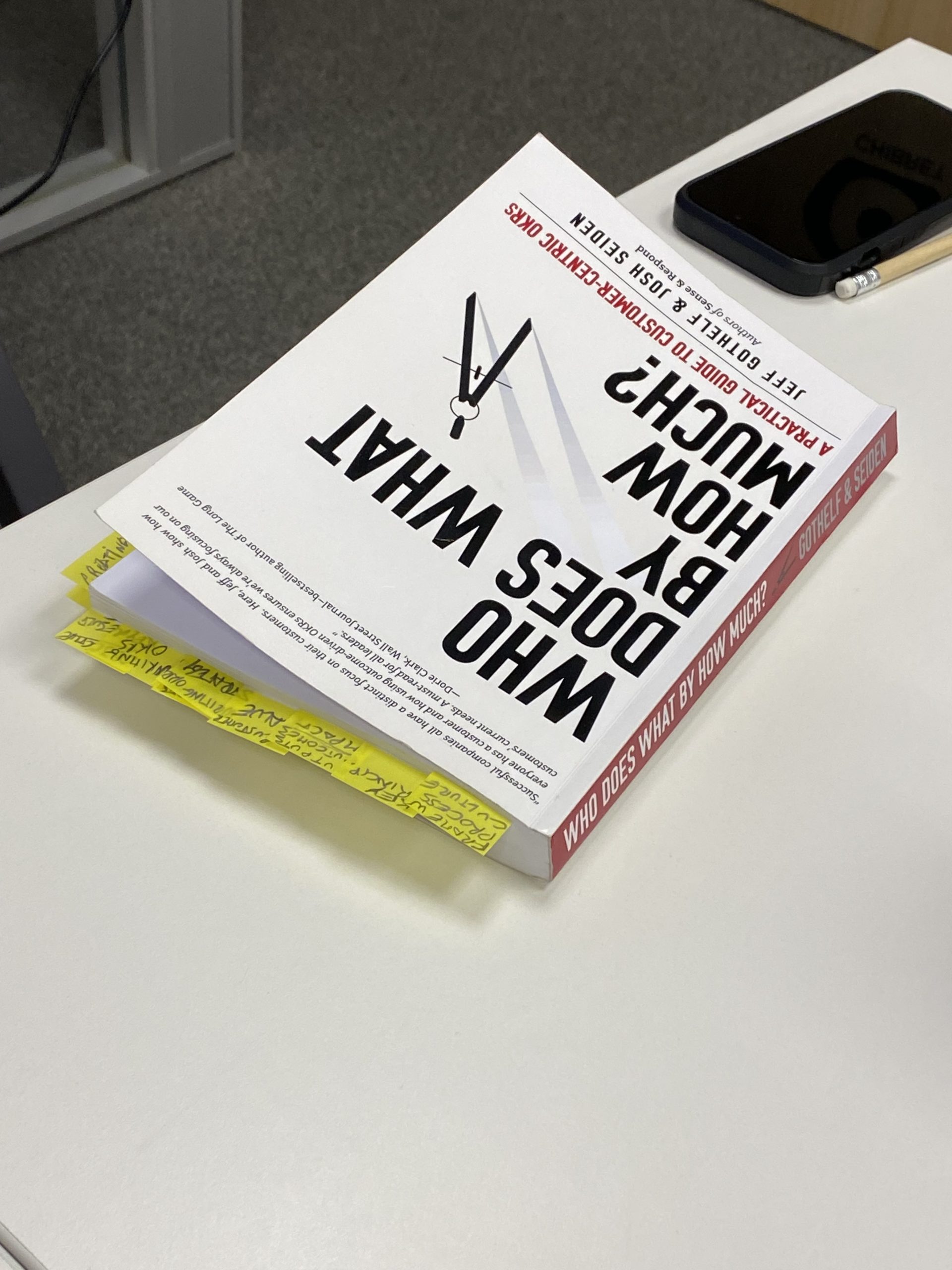
The value equation for writing a human-centric goal is, “Who does what by how much?” So let’s start at the beginning – who? Does your goal statement specifically mention the human you are serving with the work you create? To be clear, a good key result clearly states the role or job title or type of person who consumes the work you create. You want to see words like “high-spending online shopper” or “fiber optic cable installer” or “CFOs at global organizations.” If that’s missing from your goal, ask yourself who actually uses the thing you create. It’s not always obvious. For example, the first story in our OKR book is about a shoe designer. Who is their customer? It turns out it’s the marketer, the merchandiser and the buyer who has to account for the materials required to make the shoe.
Anti-pattern to watch out for: Often the system itself (in a tech environment) or an institution sneaks in as the “who” we are serving. Systems (like apps, web sites, etc) behave in ways we tell them to. We can improve that but only in service of making our customers more successful. In B2B environments we often see “the streaming media company” (for example) as the customer. That’s a good start but who, inside the company, is actually using the things you make? That’s what we’re looking for.
2. Is there a clear behavior change mentioned?
Once we’ve got the customer identified, we want to ensure our goal statement speaks to a meaningful change in their behavior. And, when I say meaningful, I mean that the change is meaningful to the customer. We want to make them more successful. Your OKR should clearly mention what your customers will be doing differently when you’ve achieved your goals. They should be completing tasks with fewer errors or doing so without having to ask for help as much. They should be buying more of your products or telling their friends about them. They should be using the internal systems you’ve launched or taking advantage of a new policy you’ve implemented. In all of these cases, your OKR goal statement should include a verb that describes your customers’ behavior.
Anti-pattern to watch out for: Often teams are so focused on what they’re making they end up putting that as their “behavior.” The way around this is to always ask, “What will people be doing differently when we succeed?” The answer “app” or “vacation policy” or “shoe design” make no sense as a response here. If these nouns appear in your goal statement ask, “What will having these things enable our customers to do differently?” That should get you to the human behavior we’re looking for.
3. Why should we care about this work?
Finally, after ensuring we’ve mentioned the customer and what they’ll be doing differently, we have to ensure that doing this work will actually matter to the business. The last thing we want to make sure is in our goal statement is a number. That number is a measure (a metric) of how much we’d like to see the customer behavior change. This number has to be meaningful to the business. If we want to reduce the number of errors in our online mortgage applications but can only commit to a 5% reduction in that behavior, is it worth doing that work? Or should we focus on something else? It’s admirable to want to make our customers more successful but if the impact of that work doesn’t return on the company’s investment it’s likely not worth doing.
Anti-pattern to watch out for: Unrealistic numbers often wind up in key results as a way to impress leadership. It’s one thing to come up with a meaningful number to the business but it also has to be feasible. Usually absolute successes like 100% or 0% metrics are unachievable. Choose numbers that are realistic. They can be a stretch goal. However, choosing numbers you’ll never hit means you’re showing up for your goal reviews, always failing to hit your targets.
Fix your goals, do the right work
Goal-setting is crucial to your team’s focus and prioritization. Writing OKRs is an excellent way to ensure you’re focused on work that is meaningful both to the customers as well as the business. Run your goals through the above checklist and ensure that your team is focused on a customer behavior change that means something to the business. Good luck!